Only 1 Week Left to Order Annual Plants! shop now
Save Up to 60% on Clearance Items! Click here for details
Last Day: 30% Off All Seeds! Click for details.
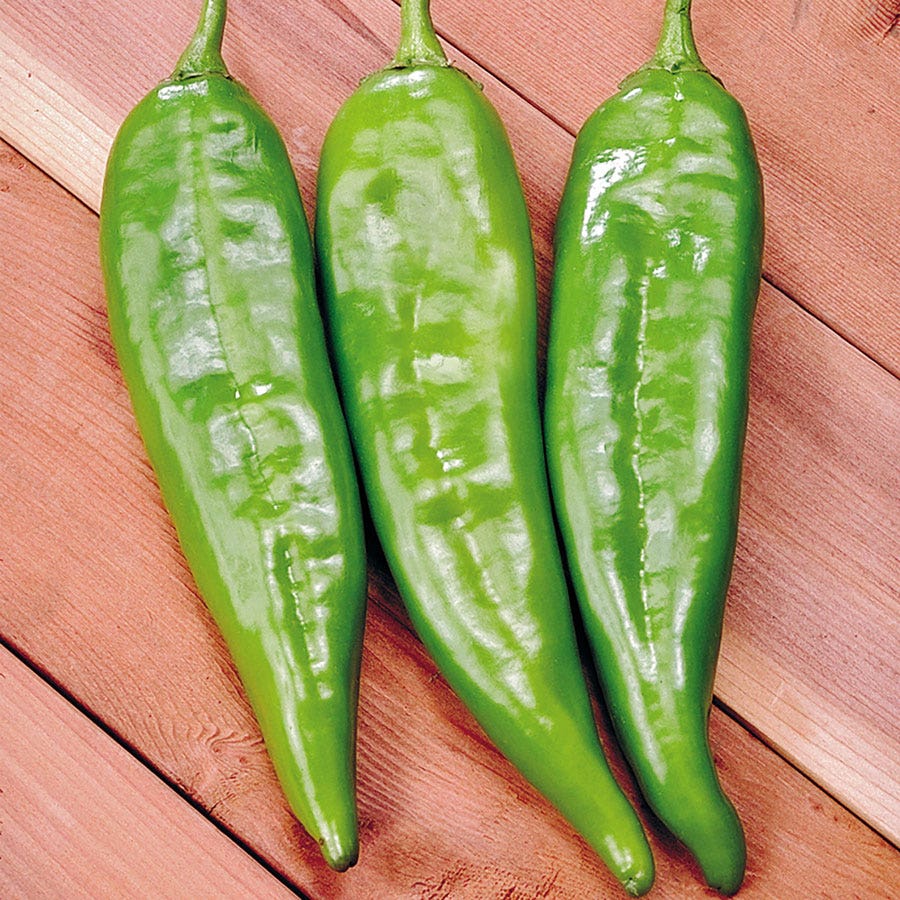
Pepper Sahuaro Hybrid
Huge Fruit Size, Mild Bite!
5241-pkt__p1.jpg
Click to Zoom / Additional Product Views

Pepper Sahuaro Hybrid

Item # 05241-PK-P1
$2.95
Buy 2+ at $2.65
Available to ship.

Enormous yields!

Great for slicing raw into salads or grilling.
(Synonym: Biggie Chile™)

68 days from setting out transplants. Here's a workhorse of a pepper you'll wonder how you ever got along without! Giant 9-inch fruits mature from bold green to deep red, packing nutrition into every bite. And although it's classified as a hot pepper, Sahuaro has such a mild bite that you can eat it raw as well as use it for stuffing, grilling, and baking!

Scoring just 500 on the Scoville Heat Index, this improved Anaheim type is crunchy-peppery-sweet straight from the plant, softening as it turns red. The peppers taper nicely to a point, adding plate appeal to their many merits. Most of all, though, they're adaptable. Chop them up for salsa, toss a handful into your spaghetti sauce, make them the foundation of Mexican meals, and keep a few on hand for garnish! You'll get absolutely enormous yields from this vigorous plant, so there will be plenty of Sahuaros to go around!

Sahuaro is a sport of the famous Big Chili II, and its good breeding shows. It's very resistant to sunburn, and demonstrates a great disease resistance package (much improved over the original Big Chili). You'll find it just a terrific all-around pepper for fresh, pickled, or dried eating. It can even be ground into a spice!

Sahuaro seeds are best sown indoors about 6 to 8 weeks before last anticipated spring frost. If you're growing them alongside tomatoes, as so many of us do, start the pepper seeds a week or two before the tomatoes. They will sprout in about 10 to 15 days at temperatures between 75 and 80 degrees F. Transplant them into the garden when they have at least two sets of true leaves and the last frost is 2 to 3 weeks past. Space the seedlings 18 to 24 inches apart in full sun and enriched, moist, well-drained soil (as you would use for tomatoes). Water the plants well all season, keep them mulched to preserve soil moisture, and feed them before planting and again after 6 weeks. Stake them if needed to hold up their heavy fruit. Pkt is 15 seeds.

Genus Capsicum
Species annuum
Variety 'Sahuaro Hybrid'
Days To Maturity 68
Fruit Color Green
Habit Vining
Seeds Per Pack 15
Fruit Length 9 in
Item Form (P) Pkt
Additional Characteristics Edible, Pest Fighter
Harvest Season Early Fall, Early Summer, Late Summer, Mid Summer
Light Requirements Full Sun
Moisture Requirements Moist,  well-drained
Resistance Disease Resistant, Scorching
Soil Tolerance Normal,  loamy
Uses Beds, Cuisine, Outdoor

From sweet to spicy to downright sizzling, there's a perfect Pepper for everyone! Our wide selection includes just what you're looking for -- whether you're wanting a fresh and colorful garnish for your salads or you need to spice up those Mexican and Oriental dishes or you're simply looking for a tasty and nutritious snack food, our Peppers are happy to provide. Keep reading and learn just what you need to know to grow the biggest and most delicious harvest of Peppers you've ever had! And if you've never attempted to grow these versatile veggies before, now is the time!


Choosing a Variety

When deciding what type of Peppers you want to grow, you will need to consider size, flavor, and color. In the category of sweet or salad Peppers, your choices include bell and pimento as well as some banana and cherry varieties. If heat is what you want, you can grow Habañero, Jalapeño, Anaheim, or Hungarian Peppers. Sweet and hot Peppers come in a rainbow of beautiful colors -- green, yellow, red, orange, and even purple. So not only are they delicious, they make great eye-candy!


When to Start

It's best to start your Peppers inside about 8 weeks before the last frost and at a temperature of 75-80 degrees F. They can be sown outdoors in early summer when the soil remains above 65 degrees F, but indoor germination is recommended.


How to Start

Park's Bio Dome seed starter is a great way to sow your Pepper seeds, as each Bio Sponge has a pre-drilled hole into which you can just drop one seed -- there's no need to thin seedlings or waste seeds! And you have several options, depending on how many Peppers you want to grow -- our original 60-cell Bio Dome, or our 18-cell Jumbo Bio Dome, which grows big, stocky seedlings ready to transplant right into your garden.

If you're using a potting mix, plant at a depth of 4 times the size of the seed (below a ¼ inch of soil). You can use our convenient Jiffy Pots and Strips -- Jiffy Pots are constructed of lightweight, biodegradable peat moss, so as the roots develop, they will grow right through the Jiffy Pot walls and into the garden soil.

If the room where you have your seeds isn't at least 70 degrees F, you can use a seedling heat mat to raise the temperature. As the first leaves appear, however, lower the temperature a bit, to 70-75 degrees F.

Fluorescent light for around 14 to 16 hours a day is also ideal for the fastest growth. You will want to keep the seedlings just a few inches below the light so they don't "stretch" and get "leggy". If you don't have strong artificial light, a sunny window will work, too -- just keep the clear dome on your Bio Dome to protect your seedlings from those chilly drafts.

Germination should occur in 10-15 days and fruit should appear in 50-80 days from sowing, depending on the variety.


Planting Out

About 2 weeks before your transplant date work the garden soil thoroughly, adding compost and fertilizer (use a 1-2-2 ratio fertilizer, before planting and again after 6 weeks). Then cover the soil with a tarp or plastic mulch to keep the weeds from sprouting until you're ready to plant. The use of mulch or a pop-up cold frame will also warm the soil, an important step before planting your young Peppers.

Ten days before transplanting, you'll need to start "hardening off" your young plants by setting them outdoors in a lightly shaded area for an hour or two. The next day, give them a longer visit outside until they remain outdoors overnight, still in their pots. Naturally, if a cold spell hits, bring them indoors again to wait for the temperature to rise.

Your plants are ready to be transplanted when they've developed their third set of true leaves. Plant them out 2-3 weeks after the last frost, placing them 1 foot apart in rows that are 30-36 inches apart -- Pepper plants do well close together. Site them in full sun in a rich, well-drained soil. Water well and mulch to conserve moisture. If you're growing the plants in straight rows, plastic mulch is far easier and effective than loose mulch (such as straw or pine bark).

Many varieties of pepper can be grown in containers! Be sure not to set them out until several weeks after last scheduled frost, and protect them by moving the container to a frost-free location if cold weather is anticipated. Mulch them in well, and provide support if needed. Many peppers are quite ornamental, and make splendid additions to the patio, porch, or balcony. Try Sweet Pickle for a beautiful and tasty crop!


Special Considerations

Seeds germinate faster at temperatures above 80 degrees F, although fruit set benefits from the cooler nights of late summer.

Peppers are very sensitive to extreme cold, so after you've planted your seedlings, if there's a chance of a really cold or frosty night, securely cover them with a plastic bucket or plastic bag.

Unless you have no other choice, don't plant your Peppers in the same place you planted Tomatoes, Eggplant, or Peppers the year before. These veggies all belong to the same plant family and therefore have similar nutritional needs and are susceptible to similar diseases. Their presence can deplete the soil of important nutrients and possibly leave remnants of diseases in leaf litter the following year. Of course, if you aren't sure what kind of soil you've got, you can always analyze it in seconds with our economical Veggie Grower's Test Kit.


Growing Tips

  • Prepare your soil in the fall. Lay in a foot or more of bio-degradable mulch -- chopped-up leaves, grass clippings, pine bark, decayed vegetable compost, humus, and even newspaper all break down into the soil over time. This feeds the soil just what it likes so that when you approach it with a tiller or shovel in spring, it just needs to be turned over and mixed up a bit. Then top off the whole rich pile with a piece of plastic to keep the mulch "cooking" as long as possible into winter and to prevent all the good nutrients from running off in hard rains.
  • If frost still threatens after you plant your Peppers, or if you live in a short-season climate where late frosts are just part of spring, there are ways to keep your Peppers going. One way is to place a tarp over the plants, weighting it down at the edges to keep it from blowing away. Be careful, however, not to lay the tarp or plastic directly on the plants. You will need to use blocks, sticks, or whatever you have available to form a tent over your tender young Peppers. You can uncover it during the day and re-cover it at night, or leave it in place for several days and nights without damage to the plants.
  • Once your seedlings are in the ground, be sure they get sufficient water -- Pepper plants are quite thirsty in early growth. Also, make sure the soil is well drained to help prevent root rot. The soil's pH level should ideally be around 6.5 to begin with, then increased or decreased afterwards to determine the chosen flavor (more acidic soil will produce a sharper, hotter taste).
  • Onions and peas are good companion plants for your Peppers. Onions repel pests like aphids, while peas fix nitrogen, and similar to Peppers, like slightly cool conditions and close quarters. Although appreciative of warm temperatures during the day, both peas and Peppers set fruit better if they can get some relief from the heat during the evenings.
  • If necessary, stake plants when they are loaded with fruit.
  • Pick your Peppers as soon as they're big enough to eat, or you can leave them on the plants to change color and flavor gradually. Don't pull them off, but rather cut them off cleanly -- Pepper plants are fragile and pulling the fruit off may damage the stems. If a stem does get broken, use a knife or cutter to remove it cleanly. Otherwise, no pruning is necessary.
  • Be careful not to over-fertilize -- too much nitrogen will result in a great-looking bushy, green plant, but very little fruit.

Pests and Problems to Watch For

The most common pests you'll find on your Peppers are spider mites and aphids, with an occasional borer. You can get rid of them with the use of an organic insecticide or dust. Onions will also help repel aphids.

As far as diseases go, Peppers tend to be susceptible to the same problems as Tomatoes. They can also get fungal infections, which can be treated with a fungicide. Treat your plants as soon as you see a problem.

High temperatures and low humidity can cause Pepper plants to lose their blossoms. In turn, cool weather can keep them from flowering. Deep cultivation can also cause blossoms to drop, as it can induce water stress if feeder roots are cut.

View All Know Before You Grow Topics

Subscribe to e-mails & get a free shipping coupon*!

*Free shipping on purchase of $40 or more. Offer valid for first-time registrants only.
  • Free Shipping Coupon
  • Special Birthday Treat
  • Exclusive Subscriber Offer
  • Latest News & Updates